Image Map
Showing posts with label creating a classroom culture. Show all posts

Inspire 180 Days


Inspire is defined by Merriam-Webster as to influence, move, or guide. Inspire means to me instilling high expectations, influencing and impacting students lives, invigorating students, and providing imagination and inventiveness into my lessons. This post will discuss how to transform your classroom to inspire your students every day.


Why I Inspire

Have you ever videoed yourself to see if all of your students are engaged? Dr. Michael Schmoker author of, Results Now, found in his research of 1,500 classrooms, only 15 percent of the classrooms had more than half of the class at least paying attention to the lesson. Wow! Only 15 percent of classrooms had their students engaged. Article: How do we know when students are engaged?

The following are influences that help to inspire your classroom and their effect sizes provided by John Hattie who wrote Visible Learning: 

  • Teacher credibility .90
  • Classroom discussion .82
  • Teacher Clarity .75
  • Teacher-Student Relationships .72
  • Student Expectations (relevance) 1.44

What do those numbers mean? It means you would show over a years growth if you implement these influences into your classroom. Love me some data! I'm such a data nerd when it comes to research and best practices! 

Are you convinced yet to inspire 180 days?

The I's of Inspire


Instill a classroom culture that has high expectations, feedback, classroom rules, and questioning. To create this culture it takes modeling from you and what you expect from your students. It also takes your students knowing what they expect from each other. 


Inventiveness and Imagination creates intrigue and adds surprise to your classroom and lessons.  To accomplish this get to know your students and what they enjoy.  Create lessons based on a theme, holiday, or favorite tv shows. Think outside of the box. Take a boring standard and add imagination to engage all of your students. I have set up construction zones to teach area, archeological digs to teach rocks, minerals, and rectilinear area, cooking Thanksgiving dinner and an airport theme to teach elapsed time. 


Invigorate your classroom with energy, excitement, and enthusiasm. If you aren't excited about teaching then your students will not be either. It is ok to laugh and be silly with your students! 

Influence and Impact your student lives. Empower them to work hard, to persevere, and to believe in themselves. Set up a red carpet, student-led parent conferences, student-student feedback, and honoring a student's work are all ways that influence and impact a student's life. 

To accomplish all of this you have to find the perfect balance for your classroom. 


The first step to Inspire 180 days is to decide What does inspire mean to you?

Next, think about your classroom are all of your students engaged? Don't know video yourself using 2 ipads. Put one ipad on you and the other on your students. Take a look at the results. Were your students inspired?

Last, start your planning. You can create an atmosphere that inspires your students to learn and grow every day. The posts that follow will be full of ideas on how to transform your room, themes, and lessons that will engage and inspire every student in your classroom. 


Got Feedback?


The last piece in becoming a great learner is feedback. My last two posts, Learn from your Mistakes and Move On and If at First You Don't Succeed Try Try Again helped to set the foundation for what a great learner looks like and does to be successful. In this post, your students will take everything they have learned about open discussion, kindness, accountable talk, mistakes, and growth mindset and apply it to feedback. 


WHAT IS FEEDBACK?

Feedback is grading an assignment and
handing it back to the student right? No!
Feedback is JUST IN TIME, JUST FOR ME, & JUST WHEN AND WHERE IT DOES THE MOST GOOD.  To provide effective feedback you have to first build a classroom culture that is safe, trusting, and promotes positive relationships. Effective feedback will explode when it is OK for students to make mistakes and feel that mistakes are welcome.  The second step in effective feedback is having clear learning intentions and success criteria. Students have to understand what they are supposed to do to be able to understand the feedback and use it to accomplish the task. A little data for you provided by John Hattie. Feedback is a 0.75 effect size and if you remember to have a years growth in your classroom the influence or strategy needs to be a 0.40. Hmm... do I have your attention now?


FEEDBACK LESSON:


The following lesson and activities with take a couple of days to complete. 
Book - Leo the Late Bloomer by Robert Kraus

To begin this lesson I opened up with the question, What makes a good learner? I wrote down what they said on an anchor chart. I then read Leo the Late Bloomer by Robert Kraus.  We discussed what Leo did to become good or better at the things that he thought he wasn't so good at. Then I would ask the following questions to spark a discussion on strengths and weaknesses. What are you strong and weak in? How do we grow our brain to be stronger in what we are weak in? 


Next, I would ask this question How do we take our weaknesses and make them strengths? I would then display the word feedback and ask your students if they know anything about this word or what they think it may mean. You can then introduce the topic of feedback by reading this story, Thanks for the Feedback by Julia Cook.

Thanks for the Feedback... I Think: My Story About Accepting Criticism and Compliments... The Right Way! (BEST ME I Can Be! Book 6) by [Cook, Julia]
This story is about a little boy named RJ. When a couple of friends give RJ compliments, he isn't sure how to respond. And when he hears from his teach and parents that there are some things he needs to work on, he argues and makes excuses.

After a class discussion on feedback, now comes the model and practice part of the lesson.  You will give each student a picture of a real insect, animal or object. Next, ask your students to fold a blank piece of paper into 4 blocks. 
Ask your students to do their best to draw this insect in the first block of the paper. You will want to give some time for your students to draw.


Here comes the exciting part! Now ask your students within their table groups to tell each other how to make their illustration more realistic. All students need to give suggestions/feedback. Put down everything and Listen, Listen, Listen! You will be so surprised and excited to hear their discussions. I 💗this part!

Next,  complete a second draft of the insect and tell your students they have to use one piece of feedback that they received. After giving time for their second draft you will have your students watch a video on a little boy named Austin and his drawing of a butterfly. Make sure to have your students think about what they notice about what the other children are saying and doing to help Austin. 
TIP: I would post these questions somewhere close to where the video is shown so they can refer back to them as they watch the video. 

                                Austin's Butterfly: Vimeo


After the video, have chalk talk questions ready and placed around the room. Give each child 4-5 post-it notes and break them into groups. Read aloud the questions and ask them to write their answers on the post-it and place on each question as they rotate around the room. 
Example Chalk Talk Questions: What am I going to do with feedback?  What did you learn from Austin’s video?   How am I going to give feedback to others?   What does feedback sound like? What were the 3 things that really stood out and that you noticed?  

Bring your students back together and discuss some of their answers. 
TIP: 1. What you are wanting to look for or hear is that the video showed the children being Kind, Specific, and the information was Useful.  


Next, you will have your students return back to their seats and give their group feedback on their second draft. Remind your student's that their feedback should be kind, specific, and useful. It is not just praise. 
TIP: Praise is important but not a part of being specific and useful when giving feedback. I would give an example: "If I gave you back a test and you had made some mistakes and I wrote great job! Did I give you anything specific or useful to help direct you to your mistakes or how to grow as a learner? NO. So we need to specific and useful when we g Here you can have that discussion of not confusing praise with feedback. 
Then you will tell your students with the feedback from their second draft to draw their third draft.  

After, you have given time to draw their third draft you will hand out 1-2 more post-it notes to each student. You will ask your class to participate in a gallery walk with the post its and have them write feedback to their classmates about their third draft.  In a gallery walk, your students will walk around and look at each student's third drawing. 

Then, ask them to sit back down and read all of their feedback and use that feedback on the third to draw the fourth and final draft. Hand out 1-2 more post-it notes and ask your students to do one more gallery walk to give feedback reminding them to make sure it is kind, specific, and useful.  

Finally, have them choose their best and add color to that one. Your students should by this point be making connections between feedback and how their drawings improved each time. 


Lesson Closure:
Bring your class back together and have a discussion about the lesson. You could do another chalk talk where they answer the questions using a post-it note or you could write their answers under each question. Example Questions: What did you learn about feedback?  How can we use feedback in math, reading, and writing?  How can we apply it to every lesson?  How do see feedback making you a better learner? 


TIPS TO REMEMBER:
1. The picture doesn't have to be an insect can be any animal or real object. 
2. To save time especially for your little ones you may want to have the paper pre-folded.
3. Before having your students give feedback the first time you may want to review how everyone needs to talk. That this is not a 1 person activity in other words you want to see all students participating by looking and discussing each others drawing. 
4. As students are drawing you can have soft music playing. You will be walking around having discussions with students on how they are using the feedback to direct them.  You could use some of the above chalk talk questions to guide your discussions. 
5. You will want to block a large amount of time for this activity to be able to give it justice. I promise it is worth it. though!
6. Remember to refer to the lesson all year when your students are having a group discussion, helping each other with assignments, or when working on a project together. 
7. Don't forget about adding in the accountable talk stems to help with giving kind, specific, and useful information.

EXTRA RESOURCES:

I Noticed & I Wondered video from Teaching Channel.
This video is about 3 minutes long and shows a classroom of students critiquing each other's work by using I noticed and I wondered statements. I use this technique when I introduce a new topic and when we are looking at my work to model how to use specific and useful information. Using stems like I noticed gets your students saying things in a kind way and practicing giving specific information they noticed.  I love the I wonder stem because it is a kinder way to point out a mistake or to ask questions about another student's work. 

To keep practicing and modeling feedback you can make anchor charts like the one above for all subjects.   I would place these on rings so you could easily turn to them when they need a stem or extra support to give feedback.

I hope this helps in your journey of teaching feedback to your class. Remember the key to this lesson is to help your students know what to improve, and give them opportunities in the future to show they’ve improved.

Love this video from Will.I.Am to add to this lesson. It has a great message on getting stronger and not quitting. 


Never forget the purpose is to close the gap in a student's learning. 


What are the ways you teach feedback in your classroom? Please share your ideas in the comments section so we can all try them. 

Remember to click follow me so you can get all the up to date posts throughout the year. 

Thanks for stopping by!


Learn From Your Mistakes and Move On!


Raise of hands how many of you say, "Practice makes Perfect?" Hands down, please. Now have you ever thought about "Practice makes Better?"  When I started learning more about growth mindset and that mistakes are ok I started saying, "Practice makes us better!"  I had to change my mindset that I don't need my students to be perfect I need them to learn and grow by making mistakes. This post is going to be all about how to teach your students a growth mindset and change their mindset that they don't have to be perfect and to move past their mistakes.


To start the process of discussing a growth mindset I like to have my students write down one thing that they felt they couldn't do, weren't good at, or didn't like.  Then we tear them up or shred them to symbolize the first step in throwing away those negative thoughts. 
Runde's Room: Change your mindset lesson

After we shredded our negative thoughts we discussed more in-depth about growth mindset using the following activities. 

HOLY MOLY, Did you know your brain grows just like a plant? 

To begin this lesson I start again by looking back at our word splatter from the perseverance lesson and take a look closer at fixed and growth mindset and mistakes. We discuss their meanings and what they might look like. I add real-life pictures to our word splatter that represents these words. I also use the Ned Show lesson plans for my growth mindset lessons.  I start first with How to grow a brain lesson. This lesson comes in two versions K-2 and 3-6.  


In the K-2 lesson, you are introducing a fixed and growth mindset by comparing how a plant grows and a brain. This lesson includes compare/contrast, writing prompts, letter writing, and discussion cards. 

In the 3-6 lesson, you define fixed by making a list of things that are "fixed."  Then discuss the difference between fixed and growth mindset. They have also provided two videos that show the different mindsets and discussion questions to use. This lesson also includes writing prompts, and an activity where they write growth mindset messages to place around your classroom. 


TIP: I would combine the activities from K-2 with the videos in 3-6 to teach these lessons. The videos are a great representation of a fixed and growth mindset for any age level. 

Runde's Room has another activity that would be so fun to do with your class called Growth Mindset Drama Circle. It is made for upper elementary but you so could tweak it to fit your little's. This activity helps your students to explore fixed and growth mindset by acting out specific scenarios. Super fun!!!

Another great activity from her blog is Growth Mindset Stick It Together. This activity students write on sticky notes about growth mindset then work together to come up with the best answer for what growth mindset is and why it is important to have it. 

After finding the meaning of growth mindset and a discussion of what it sounds like, looks like, feels like I like to read the story The Most Magnificent Thing by Ashley Spires to close these lessons out.  I love this book because it is about a little girl with a big plan to make the most magnificent thing. She quickly discovers that her perfect plan doesn’t work as perfectly as she planned. Through a wide range of emotions, she learns that by having perseverance and a growth mindset, her plan can still work in the end as long as she is willing to keep trying new ideas.


Here is a link for
an online version
 from youtube.

The Ned Show lesson has great discussion starters, writing prompts, and a super fun hands-on activity to use with this story. 

Last, create a deconstruction/construction zone. Bring in lots of random things like feathers, blocks, pipe cleaners, rubber bands, rocks, popsicle sticks, cotton balls, different kinds of paper, foil, anything you have extra of and want to get rid of.  Encourage your students to be creative to make something new, reminding them to be in a growth mindset – be flexible, redesign when necessary and most importantly, to never give up. 

Another great idea to teach a growth mindset is combining Fairy Tales and Stem. I love this idea from Whimsey Workshop Teaching!


She has several different bundles to help teach this concept using stem. Love this!!

Another great story to use to talk about mistakes and moving on is The Girl Who Never Made Mistakes by Mark Pett and Gary Rubinstein. The Ned Show has a lesson plan to follow for this story as well. 


Here is a link for
an online version
 from youtube.


Next, I made this display for us to reflect on how we persevered, how we made mistakes, how we challenged ourselves, how we grew our brains during a lesson. They would answer one of the question stems on a post-it note and then place on the brain. It is a great visual and a great entry point to have those discussions with your students about growth mindset and the lesson you just taught. 

How did you grow your math brain today?   
  • How did you challenge yourself?            
  • Describe a strategy you learned.
  • Describe a mistake you made.  
  • Tell a math word you learned today.
  • Tell about something you tried new today.

How did you grow your reading brain today?
  • Did you read with expression?
  • Did you read fluently?
  • Tell about your thinking today.
  • Did you ask questions while reading?
  • What did you visualize while reading?


Questions to think about during a mistake lesson could be : 

  • What is a mistake? 
  • How do you feel when you make a mistake?
  • What mistakes did you make today? Describe it
  • When could it be good to make a mistake?
  • Explain how you challenged yourself today.
  • What makes a good learner? I will grow my brain by....

Last, encourage and inform your parents about a growth mindset and how to help at home. Here is a great letter to explain it to parents and ways they can have a growth mindset at home. 

TPT Link


More Resources: 

We are Teachers:18 Books on Teaching Growth Mindset

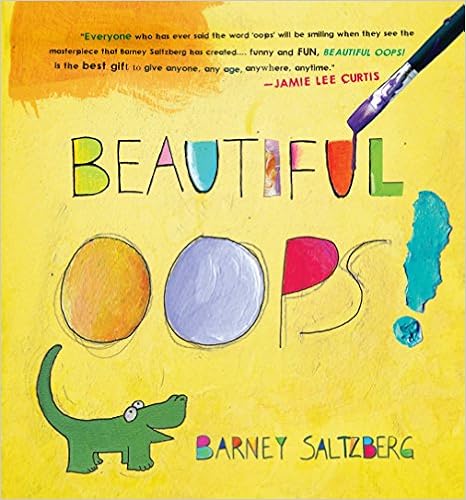
Beautiful Oops! shows young readers how every mistake is an opportunity to make something beautiful. Beautiful Oops! is filled with pop-ups, lift-the-flaps, tears, holes, overlays, bends, smudges, and even an accordion “telescope”—each demonstrating the magical transformation from blunder to wonder.
Your Fantastic Elastic Brain: Stretch It, Shape It teaches all the ways that the brain can develop with exercise, just like the rest of our bodies. Dr. JoAnn Deak offers a fun and engaging introduction to the anatomy and functions of the brain that will empower each young reader to S-T-R-E-T-C-H and grow their fantastic, elastic brain!

Welcome to Ms. Green's math class, where students are learning to persevere to solve new math problems. Even the most reluctant young mathematicians will want to follow Ms. Green's students as they work together to solve the fun and challenging problems. Ms. Green's students ask questions, try out different ideas, believe in their math power, and learn from each other. These books cover growth mindset in math and the 8 Mathematical Practices.
Here is the Author's Website. Her website includes ebooks and readers' theatre scripts covering the math practices and routines in math using math problems. The readers' theatre scripts are for upper elementary (3rd-5th).


YouCubed Another great website to teach growth mindset and mistakes in math is YouCubed.  You can find videos, tasks, and math lessons based on growth mindset under the tasks and more tab. 


Click on my theme tab to see how I transformed my room into Mistakes are Beautiful. 


Videos:


Do you have any other ideas on how to teach growth mindset to our students?

Please share your thoughts and lessons in the comment section.