
Raise of hands how many of you say, "Practice makes Perfect?" Hands down, please. Now have you ever thought about "Practice makes Better?" When I started learning more about growth mindset and that mistakes are ok I started saying, "Practice makes us better!" I had to change my mindset that I don't need my students to be perfect I need them to learn and grow by making mistakes. This post is going to be all about how to teach your students a growth mindset and change their mindset that they don't have to be perfect and to move past their mistakes.
To start the process of discussing a growth mindset I like to have my students write down one thing that they felt they couldn't do, weren't good at, or didn't like. Then we tear them up or shred them to symbolize the first step in throwing away those negative thoughts.
 |
| Runde's Room: Change your mindset lesson |
After we shredded our negative thoughts we discussed more in-depth about growth mindset using the following activities.
HOLY MOLY, Did you know your brain grows just like a plant?
 To begin this lesson I start again by looking back at our word splatter from the perseverance lesson and take a look closer at fixed and growth mindset and mistakes. We discuss their meanings and what they might look like. I add real-life pictures to our word splatter that represents these words. I also use the Ned Show lesson plans for my growth mindset lessons. I start first with How to grow a brain lesson. This lesson comes in two versions K-2 and 3-6.

In the K-2 lesson, you are introducing a fixed and growth mindset by comparing how a plant grows and a brain. This lesson includes compare/contrast, writing prompts, letter writing, and discussion cards.
In the 3-6 lesson, you define fixed by making a list of things that are "fixed." Then discuss the difference between fixed and growth mindset. They have also provided two videos that show the different mindsets and discussion questions to use. This lesson also includes writing prompts, and an activity where they write growth mindset messages to place around your classroom.
TIP: I would combine the activities from K-2 with the videos in 3-6 to teach these lessons. The videos are a great representation of a fixed and growth mindset for any age level.
 Runde's Room has another activity that would be so fun to do with your class called Growth Mindset Drama Circle. It is made for upper elementary but you so could tweak it to fit your little's. This activity helps your students to explore fixed and growth mindset by acting out specific scenarios. Super fun!!!
Another great activity from her blog is Growth Mindset Stick It Together. This activity students write on sticky notes about growth mindset then work together to come up with the best answer for what growth mindset is and why it is important to have it.
After finding the meaning of growth mindset and a discussion of what it sounds like, looks like, feels like I like to read the story The Most Magnificent Thing by Ashley Spires to close these lessons out. I love this book because it is about a little girl with a big plan to make the most magnificent thing. She quickly discovers that her perfect plan doesn’t work as perfectly as she planned. Through a wide range of emotions, she learns that by having perseverance and a growth mindset, her plan can still work in the end as long as she is willing to keep trying new ideas.
The Ned Show lesson has great discussion starters, writing prompts, and a super fun hands-on activity to use with this story.
Last, create a deconstruction/construction zone. Bring in lots of random things like feathers, blocks, pipe cleaners, rubber bands, rocks, popsicle sticks, cotton balls, different kinds of paper, foil, anything you have extra of and want to get rid of. Encourage your students to be creative to make something new, reminding them to be in a growth mindset – be flexible, redesign when necessary and most importantly, to never give up.
Another great idea to teach a growth mindset is combining Fairy Tales and Stem. I love this idea from Whimsey Workshop Teaching!

She has several different bundles to help teach this concept using stem. Love this!!
Another great story to use to talk about mistakes and moving on is The Girl Who Never Made Mistakes by Mark Pett and Gary Rubinstein. The Ned Show has a lesson plan to follow for this story as well.
Next, I made this display for us to reflect on how we persevered, how we made mistakes, how we challenged ourselves, how we grew our brains during a lesson. They would answer one of the question stems on a post-it note and then place on the brain. It is a great visual and a great entry point to have those discussions with your students about growth mindset and the lesson you just taught.

Questions to think about during a mistake lesson could be :
Last, encourage and inform your parents about a growth mindset and how to help at home. Here is a great letter to explain it to parents and ways they can have a growth mindset at home.
 Runde's Room has another activity that would be so fun to do with your class called Growth Mindset Drama Circle. It is made for upper elementary but you so could tweak it to fit your little's. This activity helps your students to explore fixed and growth mindset by acting out specific scenarios. Super fun!!!
Another great activity from her blog is Growth Mindset Stick It Together. This activity students write on sticky notes about growth mindset then work together to come up with the best answer for what growth mindset is and why it is important to have it.
After finding the meaning of growth mindset and a discussion of what it sounds like, looks like, feels like I like to read the story The Most Magnificent Thing by Ashley Spires to close these lessons out. I love this book because it is about a little girl with a big plan to make the most magnificent thing. She quickly discovers that her perfect plan doesn’t work as perfectly as she planned. Through a wide range of emotions, she learns that by having perseverance and a growth mindset, her plan can still work in the end as long as she is willing to keep trying new ideas.
 |
| Here is a link for an online version from youtube. |
The Ned Show lesson has great discussion starters, writing prompts, and a super fun hands-on activity to use with this story.
Last, create a deconstruction/construction zone. Bring in lots of random things like feathers, blocks, pipe cleaners, rubber bands, rocks, popsicle sticks, cotton balls, different kinds of paper, foil, anything you have extra of and want to get rid of. Encourage your students to be creative to make something new, reminding them to be in a growth mindset – be flexible, redesign when necessary and most importantly, to never give up.
Another great idea to teach a growth mindset is combining Fairy Tales and Stem. I love this idea from Whimsey Workshop Teaching!

She has several different bundles to help teach this concept using stem. Love this!!
Another great story to use to talk about mistakes and moving on is The Girl Who Never Made Mistakes by Mark Pett and Gary Rubinstein. The Ned Show has a lesson plan to follow for this story as well.
 |
| Here is a link for an online version from youtube. |

 |
How did you grow your math brain today?
|
 |
How did you grow your reading brain today?
|
Questions to think about during a mistake lesson could be :
- What is a mistake?
- How do you feel when you make a mistake?
- What mistakes did you make today? Describe it
- When could it be good to make a mistake?
- Explain how you challenged yourself today.
- What makes a good learner? I will grow my brain by....
Last, encourage and inform your parents about a growth mindset and how to help at home. Here is a great letter to explain it to parents and ways they can have a growth mindset at home.
 |
| TPT Link |
More Resources:
We are Teachers:18 Books on Teaching Growth Mindset
 Another great website to teach growth mindset and mistakes in math is YouCubed. You can find videos, tasks, and math lessons based on growth mindset under the tasks and more tab.
Videos:
Do you have any other ideas on how to teach growth mindset to our students?
Please share your thoughts and lessons in the comment section.
We are Teachers:18 Books on Teaching Growth Mindset
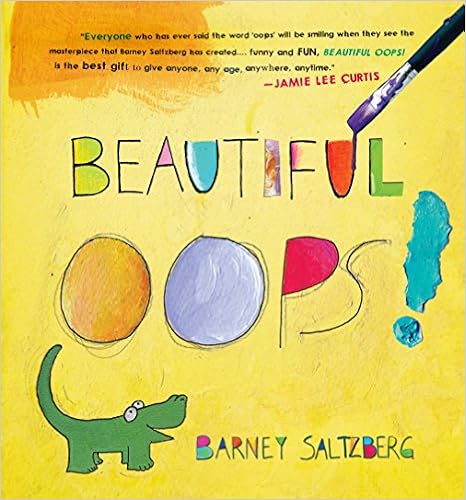 |
| Beautiful Oops! shows young readers how every mistake is an opportunity to make something beautiful. Beautiful Oops! is filled with pop-ups, lift-the-flaps, tears, holes, overlays, bends, smudges, and even an accordion “telescope”—each demonstrating the magical transformation from blunder to wonder. |
 |
| Your Fantastic Elastic Brain: Stretch It, Shape It teaches all the ways that the brain can develop with exercise, just like the rest of our bodies. Dr. JoAnn Deak offers a fun and engaging introduction to the anatomy and functions of the brain that will empower each young reader to S-T-R-E-T-C-H and grow their fantastic, elastic brain! |
 |
| Welcome to Ms. Green's math class, where students are learning to persevere to solve new math problems. Even the most reluctant young mathematicians will want to follow Ms. Green's students as they work together to solve the fun and challenging problems. Ms. Green's students ask questions, try out different ideas, believe in their math power, and learn from each other. These books cover growth mindset in math and the 8 Mathematical Practices. Here is the Author's Website. Her website includes ebooks and readers' theatre scripts covering the math practices and routines in math using math problems. The readers' theatre scripts are for upper elementary (3rd-5th). |
Another great website to teach growth mindset and mistakes in math is YouCubed. You can find videos, tasks, and math lessons based on growth mindset under the tasks and more tab. Click on my theme tab to see how I transformed my room into Mistakes are Beautiful.
Videos:
Do you have any other ideas on how to teach growth mindset to our students?
Please share your thoughts and lessons in the comment section.


